When Compassion Fails, and the Journey Begins
The Skrill’s existence in the How to Train Your Dragon franchise is a very important event in Hiccup and Toothless’s character arc; without its existence, Hiccup and Toothless will not and would not be the duo we know today.
The Skrill plays an important role in shaping Hiccup’s perspective on dragons throughout the franchise. At the beginning of the series, Hiccup strongly believes that dragons are misunderstood creatures and that they are not naturally malicious. He sees them as intelligent beings that can coexist peacefully with humans if given compassion and understanding. However, his encounter with the Skrill challenges this belief and forces him to reconsider the idea that all dragons are good at heart.
When Hiccup first encounters the Skrill, he approaches it the same way he has approached other dragons—with empathy and an attempt to understand its behavior. Instead of immediately treating it as an enemy, he tries to figure out why it is threatening the people of Berk and hopes that it might respond to a more peaceful approach. Hiccup believes that, like many other dragons he has encountered, the Skrill might simply be reacting to fear or misunderstanding.
However, the Skrill does not respond the way Hiccup expects. Rather than accepting his compassionate approach, the dragon reacts with hostility and aggression. It recognizes Hiccup’s attempt to calm the situation but rejects it entirely, choosing instead to attack both Hiccup and Toothless. This moment is significant because it is one of the first times Hiccup encounters a dragon that cannot be reasoned with in the same way as the others he has befriended.
Realizing that his usual methods are not working and that the Skrill poses a serious threat, Hiccup is forced to change his strategy. With the help of his friends, he fights back against the dragon and eventually manages to trap it inside a block of ice. The freezing conditions force the Skrill into a state of hibernation, effectively neutralizing the danger it poses to Berk.
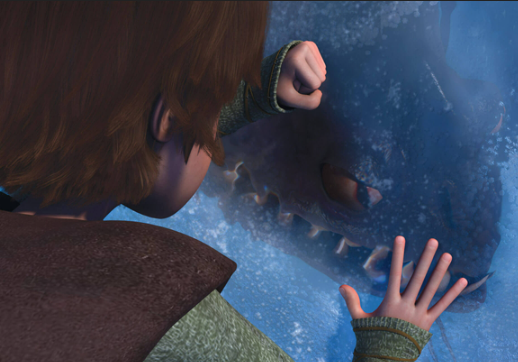
This encounter becomes a turning point for Hiccup. While he still believes that many dragons can be understood and befriended, the Skrill shows him that not every dragon will respond to kindness or empathy. As a result, Hiccup becomes more cautious and realistic in his approach to dealing with dragons, recognizing that some may remain dangerous despite his efforts to understand them.
Additional Context
The Skrill was in fact not a wild dragon, but rather a tool used for war. For context, one of the villains in Dragons: Defenders of Berk, Dagur the Deranged, had a Skrill under his “control.” The Skrill had the ability to retaliate and kill the Beserker clan if it wanted to, but it chose NOT to; it saw that both Dagur and the Skrill itself had similar interests and intentions.
Hiccup learned a few things.
- Dragons have the capacity, like humans, to do harm for no reason.
- Dragons under the control of bad people are capable of doing bad things (this idea is later revisited in the second movie, How to Train Your Dragon 2, when he meets Drago Bludvist).
If the Skrill had never existed, Hiccup may not have learned an important lesson about dragons. Before encountering the Skrill, Hiccup believed that all dragons were simply misunderstood and could be reasoned with through compassion. The Skrill challenged that belief and showed him that dragons, much like people, can have different interests, motives, and intentions. Some may choose peace, while others may choose aggression. In that sense, the Skrill foreshadows the kinds of threats and enemies Hiccup might face in the future.
Everything is Canon
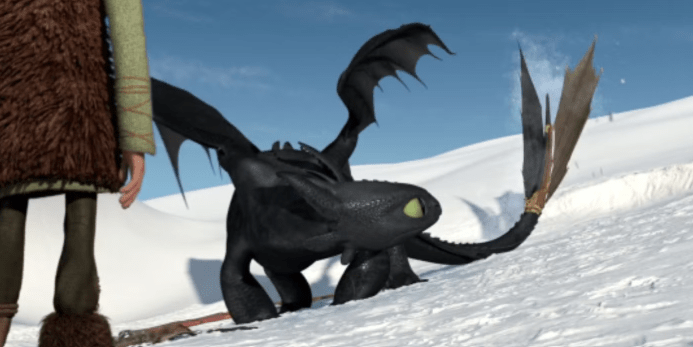
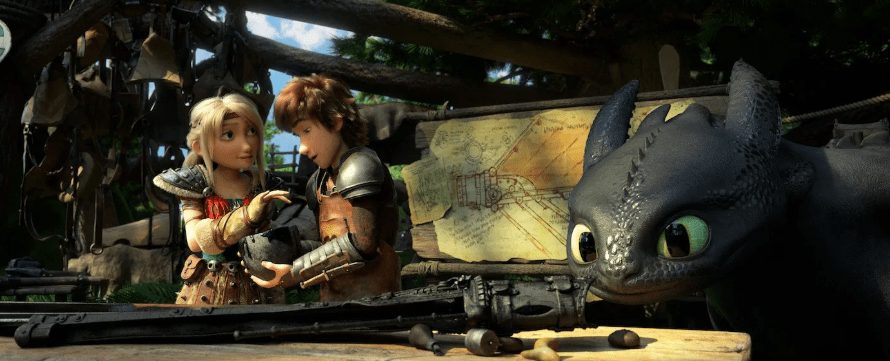
One strength of the How to Train Your Dragon franchise is that nearly every piece of media is treated as canon, whether it comes from the television series, short films, or the main movies. A good example of this continuity appears in the third animated film, How to Train Your Dragon: The Hidden World. When Hiccup builds a new tail for Toothless, Astrid reminds him, “You tried this before, and he didn’t want it.” She is referring to the short film Dragons: Gift of the Night Fury (2011), where Hiccup previously created a tail fin that would allow Toothless to fly on his own without Hiccup’s help.
With all of that in mind, the Skrill still remains an important moment in the character arcs of both Hiccup and Toothless. Its encounter with them represents a turning point in how Hiccup understands dragons and the dangers they can pose. However, with the Skrill appearing again in the live-action How to Train Your Dragon, its new design and role raise an interesting question. If the live-action version lacks some of the defining abilities and features of its animated counterpart, how could it still be used as a “weapon of destruction,” as Dagur once described it—or has something even more dangerous taken its place?
About Me
My name is Alexey, and I’m both an artist and a longtime fan of the How to Train Your Dragon franchise. Much of my creative work focuses on designing dragons, a subject that has fascinated me for years. I specialize in creating original dragon concepts and studying how their visual design communicates their abilities, behavior, and role within a fictional world.
When I design dragons, I don’t just focus on appearance. I also think about the creature’s ecology. Features such as wing shape, body structure, horns, spines, and even scale patterns help determine how a dragon would realistically survive in its environment. For example, a fast, slender dragon with narrow wings might be adapted for high-speed flight or hunting in open skies, while a heavier, armored dragon might live in mountainous terrain or rely on strength and defense. By analyzing these visual traits, I assign each dragon a believable ecological role within its habitat.
This interest in design and ecology is what inspired me to write about dragon designs from How to Train Your Dragon. Dragons like Skrill, Deadly Nadder, and Monstrous Nightmare are great examples of how visual design can communicate power, personality, and behavior. Through both my artwork and writing, I enjoy exploring how creature design shapes the worlds these dragons live in.
Contact Me
If you have questions, feedback, or want to discuss dragon design, artwork, or the How to Train Your Dragon franchise, feel free to reach out. I’m always open to thoughtful discussions about creature design, worldbuilding, and dragon ecology.
Email: alexey.kluzner@gmail.com
Phone: 780-700-2505
What You Can Contact Me About
Feel free to reach out if you want to discuss:
- Dragon design and creature concepts
- Questions about my artwork
- Thoughts on live-action adaptations of How to Train Your Dragon
- Website feedback or suggestions
- Creative collaborations
Response Time
I typically respond to messages within 2–4 days. Please note that response times may vary depending on message volume.
Social Media
You can also find my work on social media, where I mainly share my dragon artwork and creature design concepts.
I mainly use Instagram; you can find posts of my creature sketches and design concepts. Most of my posts focus on the visual side of design, showing how different features such as wings, horns, spines, and body structure shape the overall appearance of the creature.
Username: alexeyartman


View my other posts here:
Disclaimer:
All characters, designs, and concepts from How to Train Your Dragon are the direct property of DreamWorks Animation. This post is created for educational and entertainment purposes only and is not affiliated with or endorsed by DreamWorks Animation.
 Site Title
Leave a comment