Skip to content
  • The Live-Action Skrill

    March 7, 2026
    Uncategorized

    Missed Potential or New Possibilities?

    The Skrill is a formidable dragon in the How to Train Your Dragon franchise, so one might expect it to be even more dangerous and powerful in the live-action adaptation of How to Train Your Dragon. Unfortunately, that is not the case. Much like many modern live-action remakes, the Skrill appears to have received far less impressive treatment in its live-action version. As exciting as it is to see a live-action adaptation of one of the most beloved animated franchises in animation history, it does not come without its flaws.
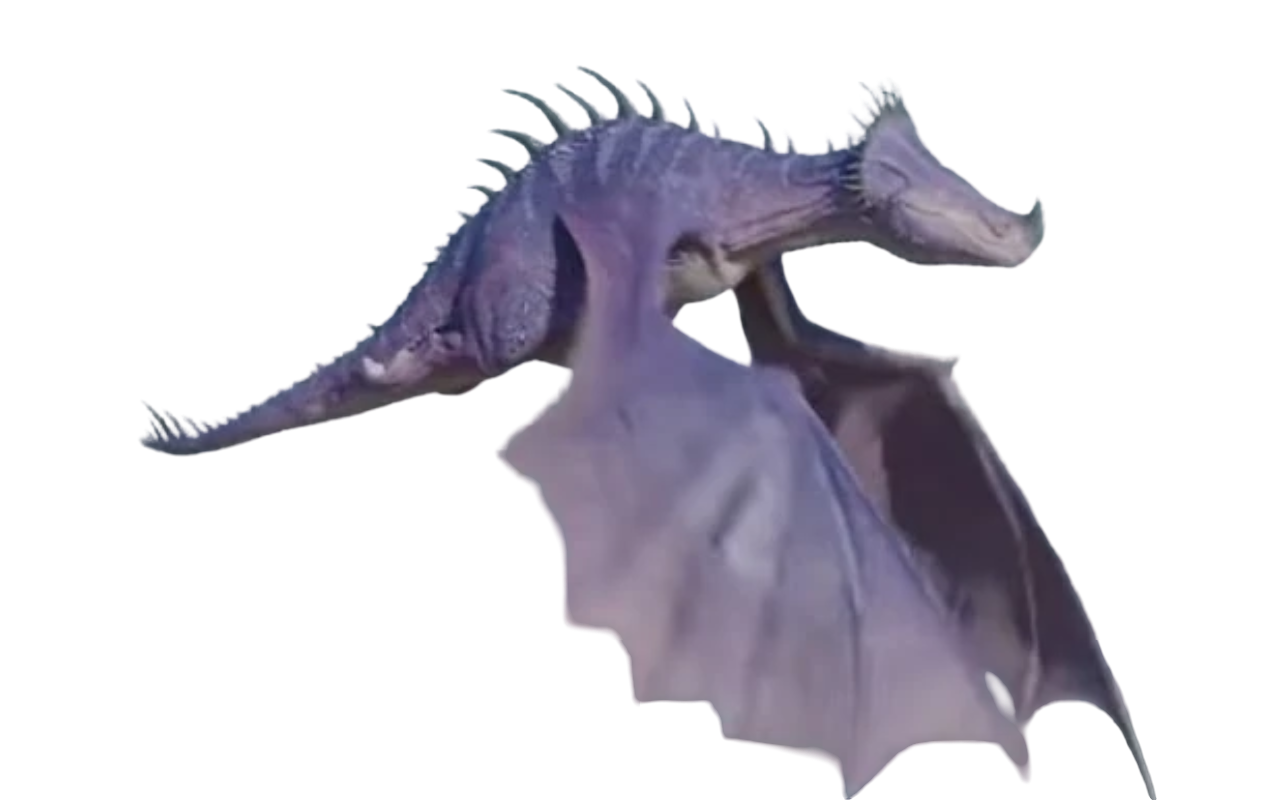
    • A stumpy desaturated purple dragon with small slender spikes on its back decreasing in chronological size going down its back, followed by a rounded head, tiny nasal horn and eyes, followed by two relitavely small wings and a short tail with a few long spikes at the tip.
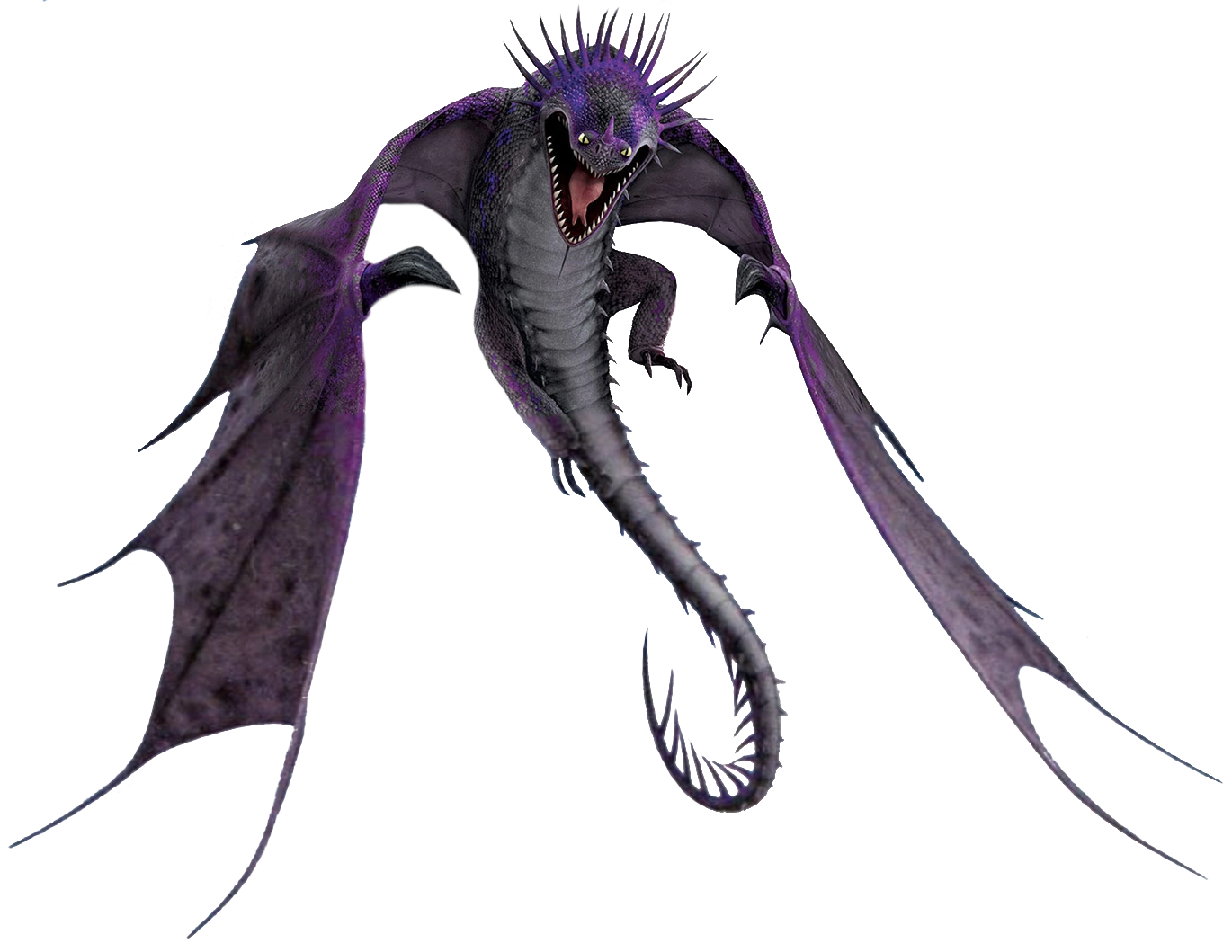
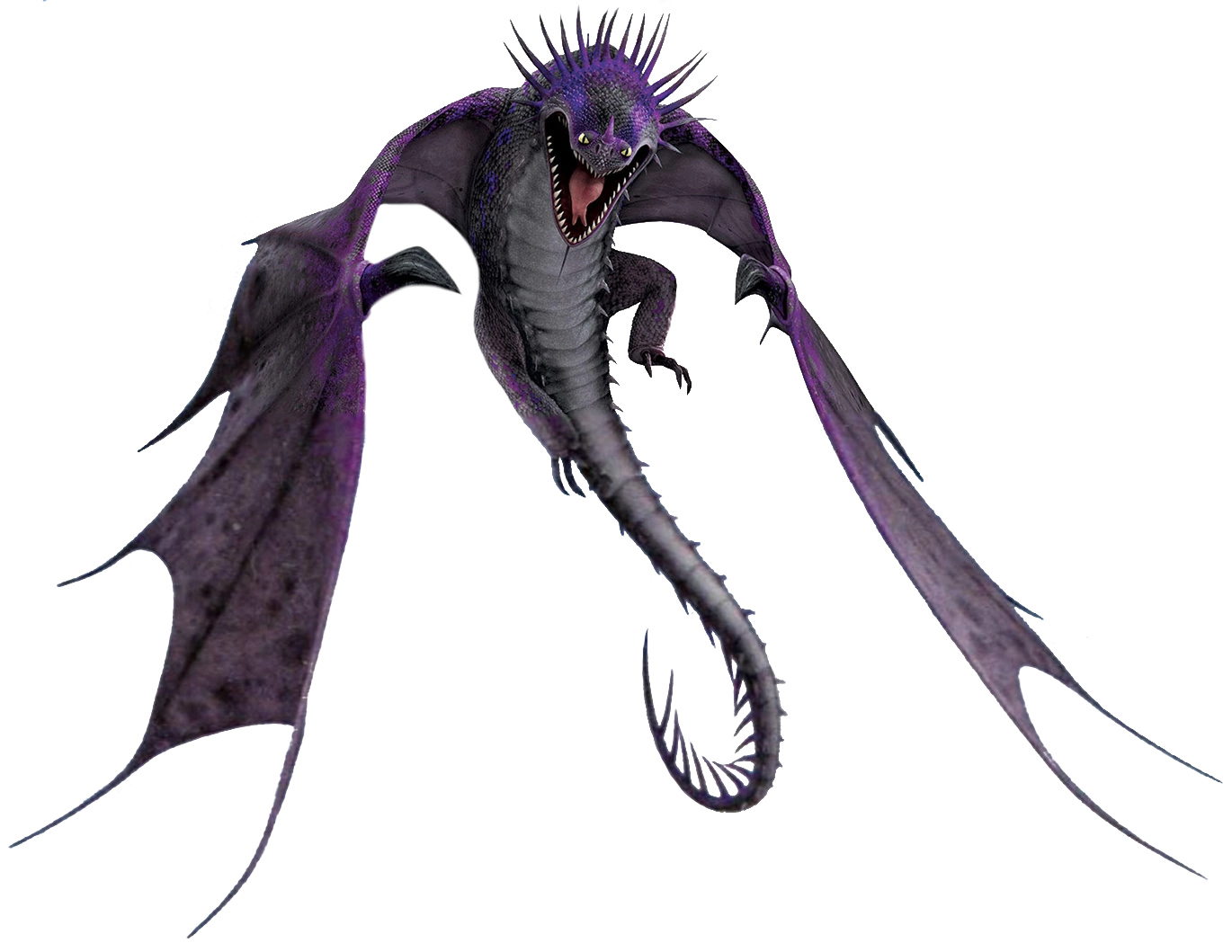
    • Long slender dragon, triangular head, small eyes at the front of the head with two nostrils, a massive snake-like mouth with countless long sharp teeth, long thin spikes on the back of its head. Huge bat like wings with five fingers. Two short stubby legs with five claws, followed by a long slender tail. It's adorned with one row of metallic spikes going from its back to the very tip of its tail decreasing in size. Its body color is a stale dark purple, followed by a very light purpleish-white on its underbelly going to the tip of its tail.

    The Design

    One of the core changes in the live-action How to Train Your Dragon is the redesign of many dragons to translate their cartoony appearances into a more realistic setting. Some dragons simply received more realistic textures and skin, while others were given noticeable structural changes to their bodies.

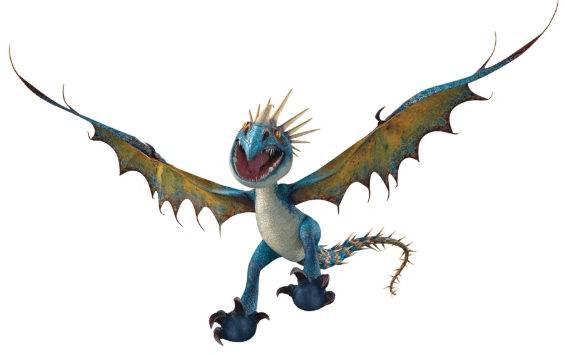
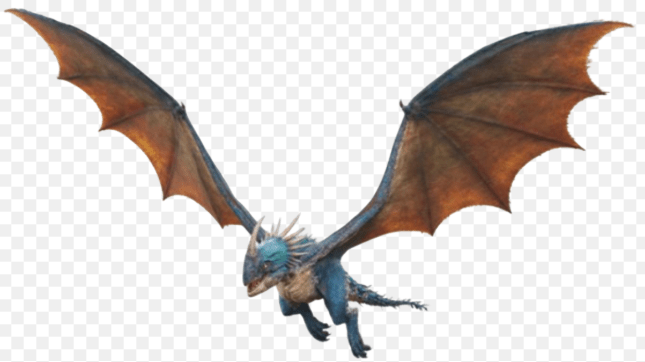
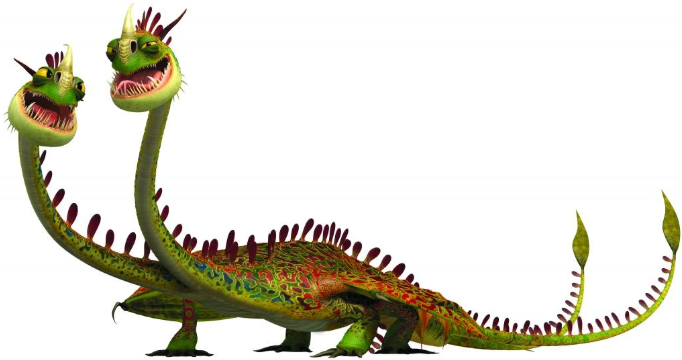
    For example, the Hideous Zippleback and the Monstrous Nightmare largely resemble their counterparts from the original animated film. However, their exaggerated features—such as oversized teeth and the prominent underbite—have been toned down. In contrast, the Deadly Nadder underwent more significant adjustments. Its overall size appears smaller, particularly in body and head width, and its head has been altered from the rounded form seen in the animated version to a sharper, more hammer-like shape.

    The Hideous Zippleback
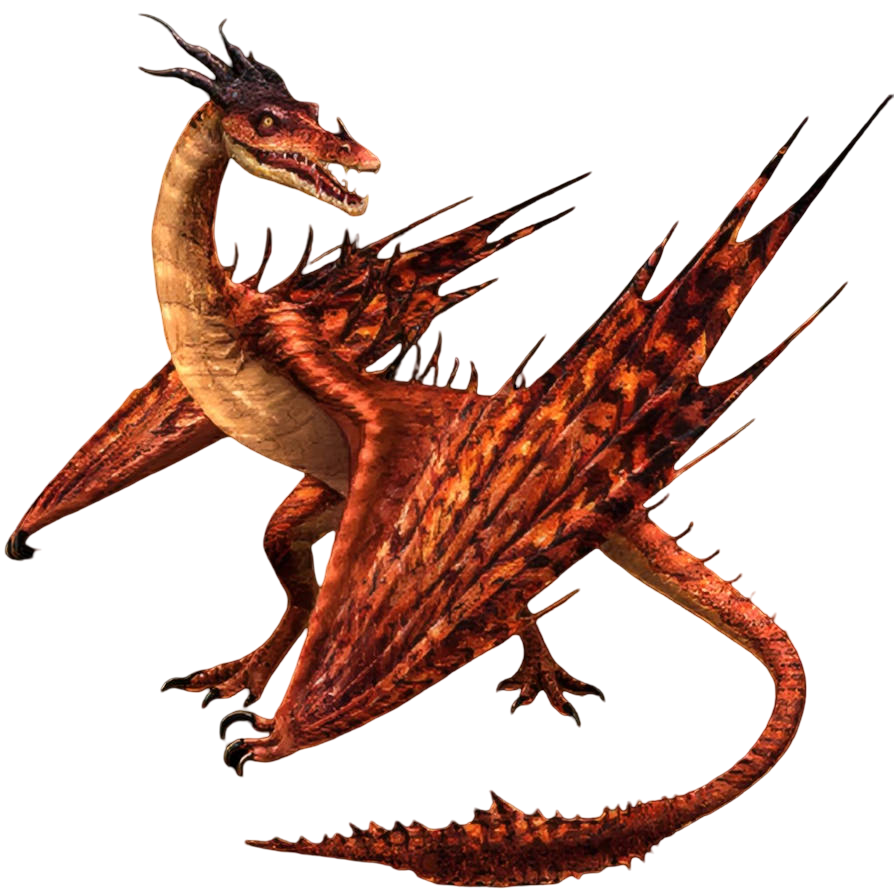
    The Monstrous Nightmare
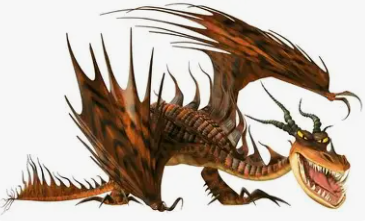
    • Monstrous Nightmare dragon with orange and brown scales, large bat-like wings lined with sharp spines, and a long tail. The dragon crouches with its wings partially spread, showing a wide open mouth filled with sharp teeth with a huge underbite and long horns resembling that of a ram extending from its head.
    • Live-action interpretation of the Monstrous Nightmare dragon from How to Train Your Dragon, featuring dark reddish scales, large membranous wings, prominent back spines, curved horns, and a fierce open-mouthed snarl revealing rows of sharp teeth.

    The Deadly Nadder

    A Storm Without Thunder

    So what does this mean for the Skrill? There is still some potential for the dragon in the live-action adaptation, but the design changes raise several concerns about how effectively that potential can be realized. In the animated series, the Skrill’s design was intentionally built to make it stand out amongst the other dragons. Its long, slender body gave it a fast and almost serpentine appearance, while its large metallic spikes and prominent crown reinforced its identity as a lightning-based dragon. These features are the core reason for visually communicating its danger, speed, and absolute power. However, the live-action version appears to have altogether removed or reduced many of these defining traits.

    Instead of the sleek and intimidating silhouette seen in the animated version, the live-action Skrill seems to have adopted a shorter and more compact build. Its once-distinct metallic spikes and crown-like head structure have been toned down, making them appear closer to the kinds of spikes found on many other dragons in the franchise. As a result, the Skrill loses some of the visual uniqueness that made it instantly recognizable. Rather than looking like a rare and powerful dragon, it risks blending in with the broader group of background dragons, making it almost invisible.

    This change also affects how threatening the Skrill appears. In the original animated series, its design alone suggested that it was not just an ordinary dragon; it looked dangerous even before it used its lightning abilities. The large spikes, sharp silhouette, and striking crown gave the impression that the Skrill was built for speed, aggression, and destruction. Without those exaggerated and distinctive features, the live-action version may struggle to capture the same level of intimidation and may potentially lose the love it once had. If the design no longer reflects the dragon’s legendary reputation, it raises an important question: can it still truly live up to the name “Skrill”?

    Reimagined Potential at a Cost

    In the end, there is still a possibility that the Skrill shown in the live-action adaptation could develop into the same dragon that Dagur eventually uses as a weapon against Berk in the animated series Dragons: Defenders of Berk. If the filmmakers choose to expand on its role in future installments, the dragon could regain some of the narrative importance it once had. The Skrill’s connection to lightning, its destructive potential, and its history with Hiccup and Toothless leave room for the story to revisit the same rivalry that made the dragon so memorable in the original series. With the right development and storytelling, the live-action version could still grow into the dragon that fans can instantly recognize.

    However, even with that potential, the current portrayal leaves a sense of uncertainty. The toned-down design and reduced presence make it harder to imagine that the Skrill will have the same impact it once did. In the animated series Dragons: Race to the Edge, its return carried emotional weight because it remembered Hiccup and Toothless and sought revenge after years of being trapped in ice. That personal conflict helped elevate the Skrill from just another dangerous dragon into an actual life-threatening antagonist.

    Without those defining elements, the encounter loses much of the tension that originally made it so compelling. If the live-action version continues in this direction, the dynamic between Hiccup and Toothless may also feel different from the one audiences have come to know and love. Their bond and their growth through moments like the Skrill encounter were central to the story’s emotional core. The Skrill is ONE of the reasons why Hiccup and Toothless are the way that they are. It was an important building block in their character arcs. Without that same depth, the duo may still exist on screen, but they may no longer feel quite like the same Hiccup and Toothless that defined the heart of the original franchise.

    About Me

    My name is Alexey, and I’m both an artist and a longtime fan of the How to Train Your Dragon franchise. Much of my creative work focuses on designing dragons, a subject that has fascinated me for years. I specialize in creating original dragon concepts and studying how their visual design communicates their abilities, behavior, and role within a fictional world.

    When I design dragons, I don’t just focus on appearance. I also think about the creature’s ecology. Features such as wing shape, body structure, horns, spines, and even scale patterns help determine how a dragon would realistically survive in its environment. For example, a fast, slender dragon with narrow wings might be adapted for high-speed flight or hunting in open skies, while a heavier, armored dragon might live in mountainous terrain or rely on strength and defense. By analyzing these visual traits, I assign each dragon a believable ecological role within its habitat.

    This interest in design and ecology is what inspired me to write about dragon designs from How to Train Your Dragon. Dragons like Skrill, Deadly Nadder, and Monstrous Nightmare are great examples of how visual design can communicate power, personality, and behavior. Through both my artwork and writing, I enjoy exploring how creature design shapes the worlds these dragons live in.

    Contact Me

    If you have questions, feedback, or want to discuss dragon design, artwork, or the How to Train Your Dragon franchise, feel free to reach out. I’m always open to thoughtful discussions about creature design, worldbuilding, and dragon ecology.

    Email: alexey.kluzner@gmail.com

    Phone: 780-700-2505

    What You Can Contact Me About

    Feel free to reach out if you want to discuss:

    • Dragon design and creature concepts
    • Questions about my artwork
    • Thoughts on live-action adaptations of How to Train Your Dragon
    • Website feedback or suggestions
    • Creative collaborations
    Response Time

    I typically respond to messages within 2–4 days. Please note that response times may vary depending on message volume.

    Social Media

    You can also find my work on social media, where I mainly share my dragon artwork and creature design concepts.

    Instagram

    I mainly use Instagram; you can find posts of my creature sketches and design concepts. Most of my posts focus on the visual side of design, showing how different features such as wings, horns, spines, and body structure shape the overall appearance of the creature.

    Username: alexeyartman

    ← Back

    Thank you for your response. ✨

    View my other posts here:

    What is the Skrill?
    Why is the Skrill so Important?

    Disclaimer:
    All characters, designs, and concepts from How to Train Your Dragon are the direct property of DreamWorks Animation. This post is created for educational and entertainment purposes only and is not affiliated with or endorsed by DreamWorks Animation.

    No comments on The Live-Action Skrill
  • What is the Skrill?

    March 7, 2026
    Uncategorized

    Species Outline

    The Skrill is a dragon listed in the Strike Class within the How to Train Your Dragon codex. It is known for its sleek, intimidating appearance, which includes metallic-looking spikes and scales that give it a sharp and armored silhouette. One of the Skrill’s most distinctive abilities is its control over lightning. Instead of breathing fire like many other dragons, the Skrill channels electricity and releases it as a powerful beam. In addition, it can act like a living lightning conductor, drawing bolts from the sky and storing the energy within its body. Once enough energy has been gathered, the Skrill can release it in a massive electrical blast capable of affecting an area with a radius of up to 100 feet in all directions.

    Long slender dragon, triangular head, small eyes at the front of the head with two nostrils, a massive snake-like mouth with countless long sharp teeth, long thin spikes on the back of its head. Huge bat like wings with five fingers. Two short stubby legs with five claws, followed by a long slender tail. It's adorned with one row of metallic spikes going from its back to the very tip of its tail decreasing in size.
Its body color is a stale dark purple, followed by a very light purpleish-white on its underbelly going to the tip of its tail.

    Like many dragons in the franchise, the Skrill is both carnivorous and piscivorous. Its diet includes animals such as boars, sheep, and fish. However, unlike many other species, the Skrill’s aggressive temperament places it higher in the food chain, which gives it the capability of hunting a wide variety of prey and can even overpower smaller dragons. Some accounts show it preying on dragons such as the Singetail, and even eels (eels are one species of fish that dragons don’t eat, as they are revolting for them, but not for the Skrill). This demonstrates both its strength and its dominance among other dragon species.

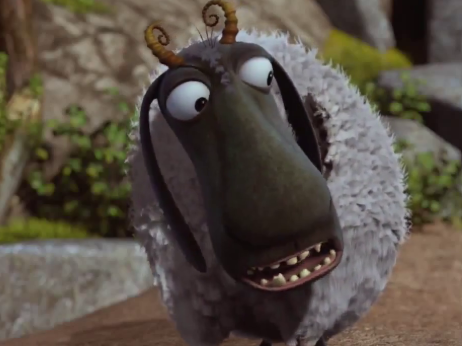
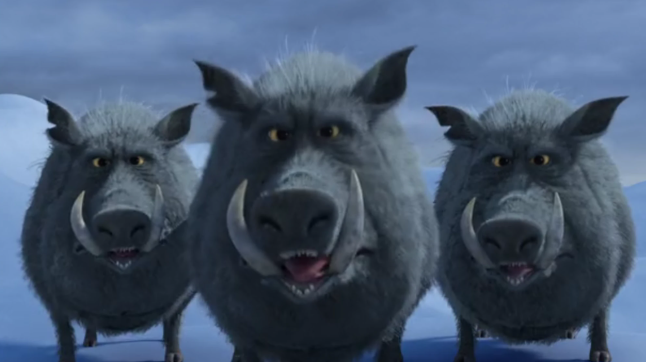
    Here are photos of the prey the Skrill eat.

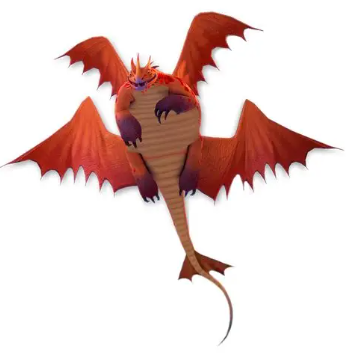
    • Primary color is orange, underbelly is a desaturated orange, all four legs have a gradient of a strong dark purple slowly fading to orange starting from its feet up its legs. A flat rounded shaped body, four short stumpy legs, followed by four wings, two small smaller ones above its front legs, and two larger ones above its hind legs. A long slender tail with two tail fins on both sides, followed by a chameleon like head with chameleon eyes followed by four horns creating a crown on the back of its head.
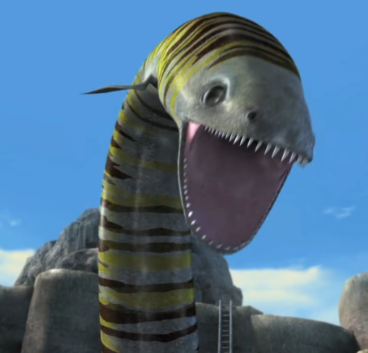
    • Pale yellow skin with black and very saturated yellow stripes, followed by small serrated teeth going all across the mouth.
    • Huge rounded snout with two big pair of eyes and two tiny ram horns above them, followed by a white fluffy coat, creating a small oval like cloud shape.
    • Three huge boars with metallic grey fur, small yellow forward facing eyes, and two large tusks.

    Order of Appearance

    The Skrill first appeared in The Book of Dragons, a short film that introduced viewers to the many diverse species of dragons within the franchise. It later appeared in the animated television series Dragons: Defenders of Berk and made its third and final appearance in Dragons: Race to the Edge, a Netflix series that expanded on the adventures of Hiccup and his friends.

    In the newer live-action adaptation of How to Train Your Dragon, the Skrill makes an appearance there. However, unlike in the animated series, it does not appear as a specific character. Instead, it can be seen only briefly in the background, serving more as a visual reference to the species than as an active participant in the story.

    It was mentioned to be present in the original animated movie of How to Train Your Dragon, but we never got a good look at it; just like in the live-action version, it was more of a background or filler dragon, until its more in-focus appearance in the animated series.

    Additional Lore

    There is also a long-standing theory among fans that the Skrill and the Night Fury share a common evolutionary branch. This idea has circulated ever since the Skrill was first introduced. Supporters of the theory point out several similarities between the two dragons. Both belong to the Strike Class, both are capable of attracting lightning, and both can break the sound barrier while flying. These similarities have led many fans to speculate that the two species may have evolved from a shared ancestor.

    What Makes the Skrill so Deadly?

    The Skrill’s storyline in the animated series further highlights its intelligence and personality. In Dragons: Defenders of Berk, Hiccup and Toothless trap the Skrill in ice (after it threatened the lives of many Berk civilians), where it remains frozen for several years. The last things the dragon sees before being imprisoned are Hiccup and Toothless themselves. When it finally breaks free in Dragons: Race to the Edge, the Skrill remembers exactly who captured it and becomes driven by a desire for revenge.

    This behavior demonstrates an impressive level of intelligence. Rather than acting purely on instinct, the Skrill is capable of recognizing individuals, recalling past events, and pursuing revenge with clear intent. Because of these traits, the Skrill stands out as one of the most dangerous and formidable dragons in the entire How to Train Your Dragon series.

    About Me

    My name is Alexey, and I’m both an artist and a longtime fan of the How to Train Your Dragon franchise. Much of my creative work focuses on designing dragons, a subject that has fascinated me for years. I specialize in creating original dragon concepts and studying how their visual design communicates their abilities, behavior, and role within a fictional world.

    When I design dragons, I don’t just focus on appearance. I also think about the creature’s ecology. Features such as wing shape, body structure, horns, spines, and even scale patterns help determine how a dragon would realistically survive in its environment. For example, a fast, slender dragon with narrow wings might be adapted for high-speed flight or hunting in open skies, while a heavier, armored dragon might live in mountainous terrain or rely on strength and defense. By analyzing these visual traits, I assign each dragon a believable ecological role within its habitat.

    This interest in design and ecology is what inspired me to write about dragon designs from How to Train Your Dragon. Dragons like Skrill, Deadly Nadder, and Monstrous Nightmare are great examples of how visual design can communicate power, personality, and behavior. Through both my artwork and writing, I enjoy exploring how creature design shapes the worlds these dragons live in.

    Contact Me

    If you have questions, feedback, or want to discuss dragon design, artwork, or the How to Train Your Dragon franchise, feel free to reach out. I’m always open to thoughtful discussions about creature design, worldbuilding, and dragon ecology.

    Email: alexey.kluzner@gmail.com

    Phone: 780-700-2505

    What You Can Contact Me About

    Feel free to reach out if you want to discuss:

    • Dragon design and creature concepts
    • Questions about my artwork
    • Thoughts on live-action adaptations of How to Train Your Dragon
    • Website feedback or suggestions
    • Creative collaborations
    Response Time

    I typically respond to messages within 2–4 days. Please note that response times may vary depending on message volume.

    Social Media

    You can also find my work on social media, where I mainly share my dragon artwork and creature design concepts.

    Instagram

    I mainly use Instagram; you can find posts of my creature sketches and design concepts. Most of my posts focus on the visual side of design, showing how different features such as wings, horns, spines, and body structure shape the overall appearance of the creature.

    Username: alexeyartman

    ← Back

    Thank you for your response. ✨

    View my other posts here:

    Why is the Skrill so Important?
    The Live-Action Skrill

    Disclaimer:
    All characters, designs, and concepts from How to Train Your Dragon are the direct property of DreamWorks Animation. This post is created for educational and entertainment purposes only and is not affiliated with or endorsed by DreamWorks Animation.
    No comments on What is the Skrill?
  • Why is the Skrill so Important?

    March 7, 2026
    Uncategorized

    When Compassion Fails, and the Journey Begins

    The Skrill’s existence in the How to Train Your Dragon franchise is a very important event in Hiccup and Toothless’s character arc; without its existence, Hiccup and Toothless will not and would not be the duo we know today.

    The Skrill plays an important role in shaping Hiccup’s perspective on dragons throughout the franchise. At the beginning of the series, Hiccup strongly believes that dragons are misunderstood creatures and that they are not naturally malicious. He sees them as intelligent beings that can coexist peacefully with humans if given compassion and understanding. However, his encounter with the Skrill challenges this belief and forces him to reconsider the idea that all dragons are good at heart.

    When Hiccup first encounters the Skrill, he approaches it the same way he has approached other dragons—with empathy and an attempt to understand its behavior. Instead of immediately treating it as an enemy, he tries to figure out why it is threatening the people of Berk and hopes that it might respond to a more peaceful approach. Hiccup believes that, like many other dragons he has encountered, the Skrill might simply be reacting to fear or misunderstanding.

    However, the Skrill does not respond the way Hiccup expects. Rather than accepting his compassionate approach, the dragon reacts with hostility and aggression. It recognizes Hiccup’s attempt to calm the situation but rejects it entirely, choosing instead to attack both Hiccup and Toothless. This moment is significant because it is one of the first times Hiccup encounters a dragon that cannot be reasoned with in the same way as the others he has befriended.

    Realizing that his usual methods are not working and that the Skrill poses a serious threat, Hiccup is forced to change his strategy. With the help of his friends, he fights back against the dragon and eventually manages to trap it inside a block of ice. The freezing conditions force the Skrill into a state of hibernation, effectively neutralizing the danger it poses to Berk.

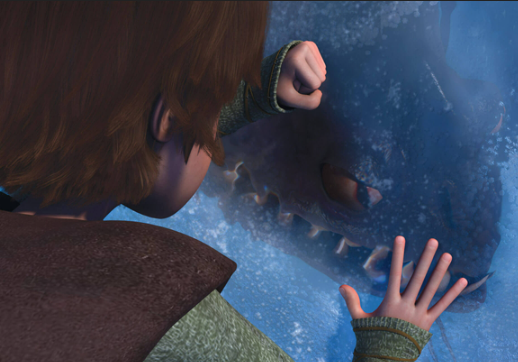
    Hiccup stands close to a thick wall of ice, looking at the frozen Skrill trapped inside. The dragon’s face and teeth are faintly visible beneath the icy surface, whilst frost and cracks surround it. Hiccup raises one hand toward the ice while his other hand is clenched in a fist, suggesting a mix of tension and determination. The cold blue lighting and the close distance between Hiccup and the dragon emphasize the intensity of the moment, capturing the aftermath of the battle in which the Skrill was frozen and forced into hibernation.
    Dragons: Defenders of Berk — Season 1, Episode 18, “The Skrill.”

    This encounter becomes a turning point for Hiccup. While he still believes that many dragons can be understood and befriended, the Skrill shows him that not every dragon will respond to kindness or empathy. As a result, Hiccup becomes more cautious and realistic in his approach to dealing with dragons, recognizing that some may remain dangerous despite his efforts to understand them.

    Additional Context

    The Skrill was in fact not a wild dragon, but rather a tool used for war. For context, one of the villains in Dragons: Defenders of Berk, Dagur the Deranged, had a Skrill under his “control.” The Skrill had the ability to retaliate and kill the Beserker clan if it wanted to, but it chose NOT to; it saw that both Dagur and the Skrill itself had similar interests and intentions.

    Hiccup learned a few things.

    1. Dragons have the capacity, like humans, to do harm for no reason.
    2. Dragons under the control of bad people are capable of doing bad things (this idea is later revisited in the second movie, How to Train Your Dragon 2, when he meets Drago Bludvist).

    If the Skrill had never existed, Hiccup may not have learned an important lesson about dragons. Before encountering the Skrill, Hiccup believed that all dragons were simply misunderstood and could be reasoned with through compassion. The Skrill challenged that belief and showed him that dragons, much like people, can have different interests, motives, and intentions. Some may choose peace, while others may choose aggression. In that sense, the Skrill foreshadows the kinds of threats and enemies Hiccup might face in the future.

    Everything is Canon

    One strength of the How to Train Your Dragon franchise is that nearly every piece of media is treated as canon, whether it comes from the television series, short films, or the main movies. A good example of this continuity appears in the third animated film, How to Train Your Dragon: The Hidden World. When Hiccup builds a new tail for Toothless, Astrid reminds him, “You tried this before, and he didn’t want it.” She is referring to the short film Dragons: Gift of the Night Fury (2011), where Hiccup previously created a tail fin that would allow Toothless to fly on his own without Hiccup’s help.

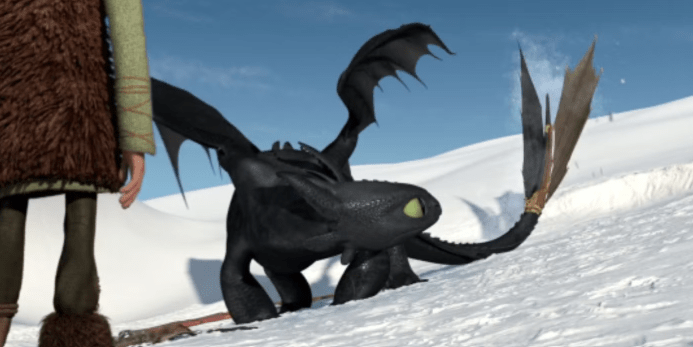
    Toothless, the black Night Fury dragon, standing on a snowy hillside with his artificial tail fin extended while Hiccup stands partially in front of him.
    Dragons: Gift of The Night Fury (2011)
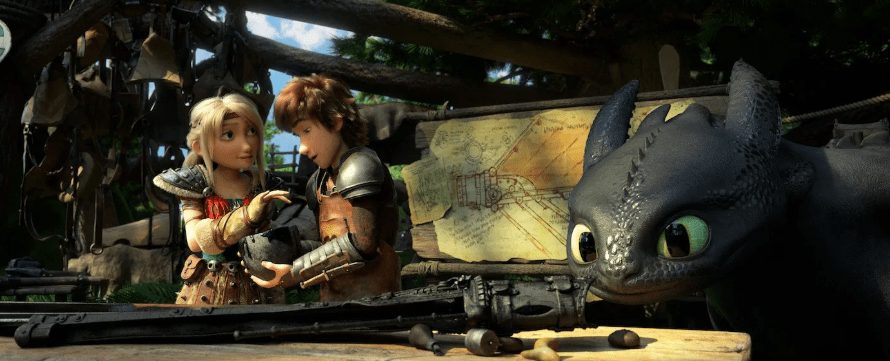
    Hiccup and Astrid working on the design for Toothless’s prosthetic tail fin at a wooden workbench while Toothless looks on.
    How to Train Your Dragon: The Hidden World (2019)

    With all of that in mind, the Skrill still remains an important moment in the character arcs of both Hiccup and Toothless. Its encounter with them represents a turning point in how Hiccup understands dragons and the dangers they can pose. However, with the Skrill appearing again in the live-action How to Train Your Dragon, its new design and role raise an interesting question. If the live-action version lacks some of the defining abilities and features of its animated counterpart, how could it still be used as a “weapon of destruction,” as Dagur once described it—or has something even more dangerous taken its place?

    About Me

    My name is Alexey, and I’m both an artist and a longtime fan of the How to Train Your Dragon franchise. Much of my creative work focuses on designing dragons, a subject that has fascinated me for years. I specialize in creating original dragon concepts and studying how their visual design communicates their abilities, behavior, and role within a fictional world.

    When I design dragons, I don’t just focus on appearance. I also think about the creature’s ecology. Features such as wing shape, body structure, horns, spines, and even scale patterns help determine how a dragon would realistically survive in its environment. For example, a fast, slender dragon with narrow wings might be adapted for high-speed flight or hunting in open skies, while a heavier, armored dragon might live in mountainous terrain or rely on strength and defense. By analyzing these visual traits, I assign each dragon a believable ecological role within its habitat.

    This interest in design and ecology is what inspired me to write about dragon designs from How to Train Your Dragon. Dragons like Skrill, Deadly Nadder, and Monstrous Nightmare are great examples of how visual design can communicate power, personality, and behavior. Through both my artwork and writing, I enjoy exploring how creature design shapes the worlds these dragons live in.

    Contact Me

    If you have questions, feedback, or want to discuss dragon design, artwork, or the How to Train Your Dragon franchise, feel free to reach out. I’m always open to thoughtful discussions about creature design, worldbuilding, and dragon ecology.

    Email: alexey.kluzner@gmail.com

    Phone: 780-700-2505

    What You Can Contact Me About

    Feel free to reach out if you want to discuss:

    • Dragon design and creature concepts
    • Questions about my artwork
    • Thoughts on live-action adaptations of How to Train Your Dragon
    • Website feedback or suggestions
    • Creative collaborations
    Response Time

    I typically respond to messages within 2–4 days. Please note that response times may vary depending on message volume.

    Social Media

    You can also find my work on social media, where I mainly share my dragon artwork and creature design concepts.

    Instagram

    I mainly use Instagram; you can find posts of my creature sketches and design concepts. Most of my posts focus on the visual side of design, showing how different features such as wings, horns, spines, and body structure shape the overall appearance of the creature.

    Username: alexeyartman

    ← Back

    Thank you for your response. ✨

    View my other posts here:

    What is the Skrill?
    The Live-Action Skrill

    Disclaimer:
    All characters, designs, and concepts from How to Train Your Dragon are the direct property of DreamWorks Animation. This post is created for educational and entertainment purposes only and is not affiliated with or endorsed by DreamWorks Animation.
    No comments on Why is the Skrill so Important?

Blog at WordPress.com.

Site Title

    • About
 

Loading Comments...
 

    • Subscribe Subscribed
      • Site Title
      • Already have a WordPress.com account? Log in now.
      • Site Title
      • Subscribe Subscribed
      • Sign up
      • Log in
      • Report this content
      • View site in Reader
      • Manage subscriptions
      • Collapse this bar